Your First Espresso Shot: What to Expect

Coffee obsessive and home roaster. Daily driver: a Gaggia Classic Pro and a single-dosing Mazzer Super Jolly.
Just so you know, some links on this page are affiliate links. If you buy something via them, we get a small kickback. You don't pay more, but it helps toward the beans.
Your first shot will taste wrong. Probably sour and thin, possibly bitter, almost certainly nothing like a cafe. This is not a problem with the machine. It is not a sign you bought the wrong equipment. It is the normal starting point for everyone who has ever made espresso at home, including the people posting beautiful latte art on r/espresso. They just don't photograph the weeks of bad coffee that came first.
{{product:machine-gaggia-classic-pro}}
The variables that matter, grind size, dose weight, extraction time, are all adjustable. The machine you bought can make excellent espresso. The question is whether you know what to adjust and in which direction.
Why your first shots taste wrong
The most common problem is grind size, and it's almost always too coarse. Espresso requires a much finer grind than any other brewing method - we're talking powder-fine, where the grounds clump together when you pinch them. If your grinder was set for filter coffee, you'll need to go significantly finer. When shots run in under 15 seconds and taste sour and watery, grind finer. This is the answer to 80% of beginner problems. Our sour vs bitter troubleshooting guide goes deep on this.
The second issue is dosing. Most double portafilter baskets are designed for 16-20g of coffee. Too little and the water flows through too easily. Too much and you get channeling - water finding paths of least resistance and over-extracting some grounds while under-extracting others. The solution is weighing your coffee every time. Not approximately, not "about one scoop" - actually weighing on a scale with 0.1g precision.
Timing matters too. A well-extracted double shot should take roughly 25-35 seconds from the moment you start the pump to when you have about 36g of liquid in the cup. Under 20 seconds usually means sour, under-extracted coffee. Over 40 seconds typically means bitter, over-extracted coffee. But these are guidelines, not rules - some coffees taste better at different ratios and times.
Channeling is the sneaky problem nobody warns you about. This is when water finds an easy path through your coffee puck instead of flowing evenly through all the grounds. You'll see it as spraying or uneven flow from a bottomless portafilter, or taste it as shots that are both bitter and sour at the same time (the channeled area over-extracts while the rest under-extracts). The fix is better distribution before tamping - shake the portafilter gently, use a distribution tool, or just tap the sides to settle the grounds evenly.
The learning curve is real
Expect about two weeks of mediocre coffee while you develop the basics. You're building muscle memory for dosing (how much coffee, how to distribute it), tamping (consistent pressure, level surface), and timing (when to start, when to stop). These small physical skills feel awkward at first and automatic later. You can't skip this phase - it's just practice.
During this time, you'll waste some coffee. Budget for it. A 250g bag might only give you 10 shots' worth of drinkable espresso while you're learning. This is normal and expected. Think of it as tuition fees for learning a new skill. After you've figured out your equipment and technique, waste drops to nearly zero. What your first good shot actually tastes like
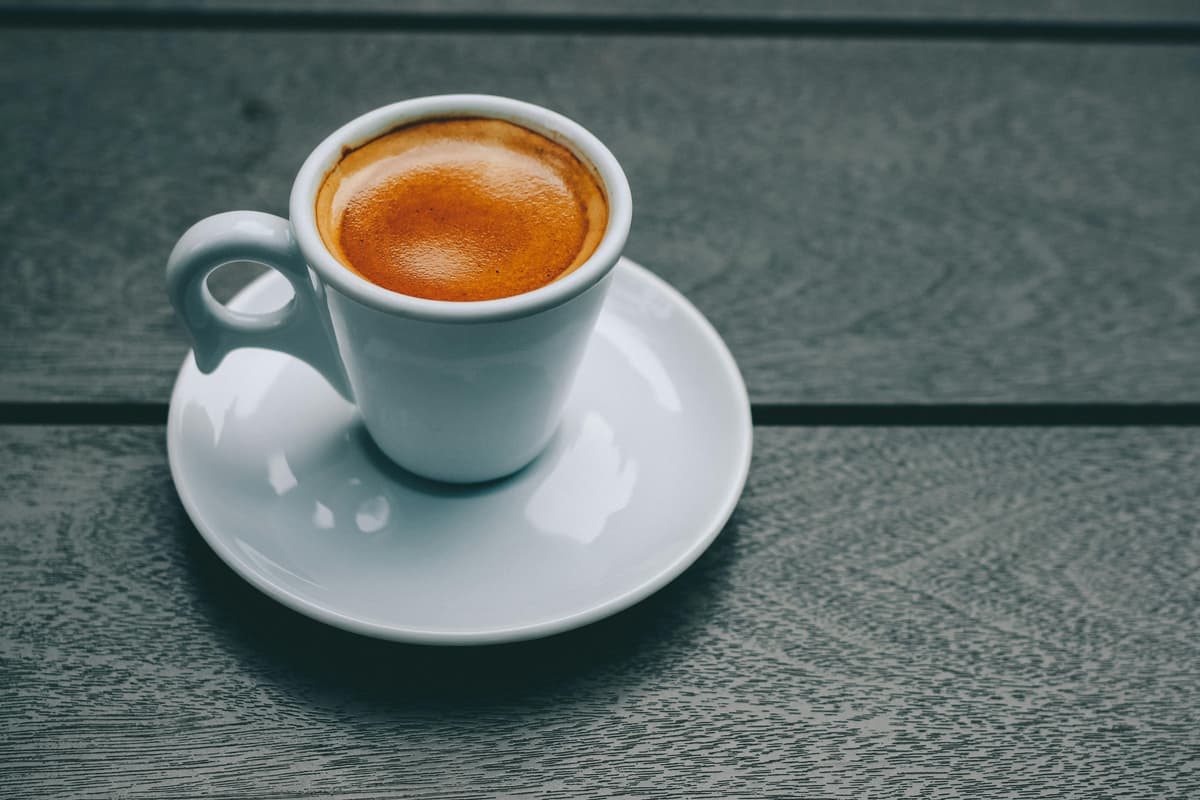
You'll know it when it happens. A properly extracted espresso has sweetness. Not sugar sweetness, but a rounded, caramel-like smoothness that sits behind the bitterness and balances it. The crema on top should be hazelnut-coloured, thick enough to hold sugar for a moment, and carry a pleasant aroma that's distinctly different from brewed coffee.
The body should feel thick compared to filter coffee. If it feels thin and watery, you're under-extracting (grind finer). If it tastes like you licked an ashtray, you're over-extracting (grind coarser). The target is somewhere in between, where complexity lives.
Good espresso changes as it cools. The first sip hot reveals roast character and body. As it drops to lukewarm over 2-3 minutes, the flavour notes open up. If you're drinking a single-origin Ethiopian, you might taste blueberry or stone fruit. A Brazilian espresso might show chocolate and nuts. These flavours were always there, the extraction and temperature just needed to let them through.
If your shot is hitting the right time window (25-30 seconds) and still tastes flat or one-dimensional, the beans are the next variable to examine. Stale supermarket beans simply cannot produce the complexity that fresh specialty beans can. One bag from a good roaster will show you what your equipment is capable of.
A starting recipe to work from
Every shot needs a recipe - a target you're trying to hit. Start with this:
Dose: 18g of ground coffee in your portafilter basket (weighed on a scale).
Yield: 36g of liquid espresso in your cup (also weighed).
Time: 25-30 seconds from pressing the button to reaching your target yield.
This 1:2 ratio (18g in, 36g out) works well for most medium-roasted espresso blends. It's your baseline, not your final destination. Once you can consistently hit this target, you can experiment - lighter roasts often taste better at 1:2.5 or even 1:3, while darker roasts might prefer 1:1.5 or 1:2.
The key word here is "consistently." If your first shot takes 22 seconds and your second takes 35 seconds with the same settings, something in your technique is varying. Probably dose or distribution. Fix that before changing grind size.
How to diagnose what's wrong
Shot too fast (under 20 seconds) and tastes sour or watery: Grind finer. This is the most common issue for beginners. Keep grinding finer until shots slow down.
Shot too slow (over 40 seconds) and tastes bitter or burnt: Grind coarser. You've gone too fine, or your dose is too high.
Shot looks okay but tastes both sour AND bitter: Channeling. Water is finding easy paths. Work on distribution before tamping - make sure the grounds are evenly spread in the basket.
Shot timing is good but tastes flat or muted: Probably stale beans. Coffee older than 3-4 weeks from roast date won't extract properly for espresso. Buy fresher beans.
Shot looks thin with no crema: Could be stale beans, could be grind too coarse, could be water temperature too low (if your machine has been sitting idle).
Shots wildly inconsistent despite doing everything the same: Your grinder probably can't produce consistent enough particles. This is frustrating but real - cheap grinders make dialling in nearly impossible because the grind changes randomly shot to shot.
The one-variable rule
When something's wrong, change only one thing at a time. If your shot ran too fast and tasted sour, only adjust the grind finer. Don't also change your dose and your tamp pressure simultaneously. If you change multiple variables, you won't know which one fixed (or broke) the shot.
This feels slow when you're eager to get better coffee. It's actually faster. Random changes mean random results. Systematic changes mean you learn what each variable does and can dial in new beans in 2-3 shots instead of 20.
Equipment that helps vs equipment that doesn't
You need a scale. Full stop. A cheap Amazon scale with 0.1g precision is fine - you don't need a premium Acaia. Our espresso scales guide covers the best options at every price. Weigh your dose going in and your yield coming out. This transforms espresso from guessing to science.
You need fresh beans. Supermarket coffee was often roasted months ago. Find a local roaster or order online. You want beans roasted within the last 2-3 weeks. Too fresh (under 5 days) can actually be problematic as the beans are still degassing - but too old is far worse.
You probably don't need most accessories yet. WDT tools, distribution tools, precision tampers - these help but they're refinements, not fundamentals. Our accessories guide separates the essentials from the Instagram props. Learn the basics with basic equipment first. Add optimisations later when you understand what they're optimising.
When it's not your fault
Sometimes the equipment genuinely is the problem. If you're doing everything right - consistent dose, good distribution, proper technique - and shots are still wildly inconsistent, your grinder might not be capable of espresso. Budget grinders often can't grind fine enough or produce consistent enough particle sizes. This isn't a skill issue you can practice through.
Signs your grinder is the bottleneck: You can't grind fine enough to slow shots down no matter what. Or you grind finer and shots don't change much. Or one shot takes 25 seconds and the next takes 40 seconds with identical technique.
The Baratza Encore ESP or a hand grinder like the Timemore C3 ESP PRO are the minimum for actual espresso capability. *(Check Timemore)* Below that threshold, you're fighting the equipment.
The breakthrough moment
Here's what nobody tells you: after about 20-30 shots, something clicks. You'll pull one that actually tastes good - balanced, sweet, maybe even a bit of the tasting notes from the bag. You'll understand why people bother with all this fuss. And then you'll spend the rest of your coffee life trying to replicate and improve on that moment.
The first good shot is addictive. It proves that your equipment works, that the skill is learnable, and that cafe-quality espresso at home is genuinely possible. If you want to understand the science behind what just happened, James Hoffmann's World Atlas of Coffee is the best money you'll spend. Most people who reach this point never go back to instant or filter. Fair warning.
What "dialled in" actually means
You'll hear people talk about being "dialled in" with their coffee. This just means you've found the right grind setting, dose, and yield for a particular bag of beans. Once you're dialled in, you can replicate the same quality shot consistently until the beans change (either you finish the bag or the beans age noticeably after 3-4 weeks).
The first time you dial in a new bag, expect to spend 3-5 shots figuring it out. You'll start with your baseline recipe (18g in, 36g out, 25-30 seconds) and adjust the grind until it tastes right. With experience, this process gets faster - you start recognising how different origins and roast levels behave, and you can make more accurate first guesses.
Being dialled in doesn't mean every shot is identical. Small variations in room humidity, bean age, and your technique will create minor differences. But you should be able to pull shots in a consistent time range (say, 26-32 seconds) that all taste good, just with slight variations. If shots are swinging between 20 and 40 seconds with the same settings, you're not dialled in yet - something in your workflow is inconsistent.
Getting help when you're stuck
If you've been at it for two weeks and can't pull a drinkable shot, post your setup and technique to r/espresso. Include: your machine, your grinder, your dose, your yield, your time, and what the shot looks like. People there diagnose issues quickly because they've seen every possible problem. No question is too basic - everyone started somewhere.
Welcome to the hobby. The first shots are rough. It gets better.
Common questions about first espresso shots
Why does my espresso taste sour?
Sour espresso almost always means under-extraction, and the fix is grinding finer. When water passes through the coffee too quickly, it doesn't have time to dissolve the sweet and bitter compounds that balance out the acids. If your shot ran in under 20 seconds, that's your answer. Keep grinding finer until shots take 25-30 seconds and the sourness transforms into sweetness.
How fine should I grind for espresso?
Finer than you probably think. Espresso grind should feel like powdered sugar or fine sand, and the particles should clump together slightly when you pinch them. If it feels like table salt or beach sand, you're too coarse. Most beginners start way too coarse because they're afraid of choking the machine. Don't be - grinding too fine is easier to fix than grinding too coarse.
Do I really need to weigh my coffee?
Yes, and this is the single biggest improvement most beginners can make. "About 18 grams" varies by several grams depending on who's eyeballing it, and that variation completely changes your shot. An inexpensive scale removes all guesswork. Weigh 18g in, aim for 36g out, and suddenly you can actually troubleshoot when something goes wrong.
How long until I can make good espresso?
Most people pull their first genuinely good shot somewhere between 20 and 30 attempts. That's roughly two weeks if you're making one or two drinks a day. The learning curve is real, but it's not endless. Once the fundamentals click - consistent dose, proper grind, even distribution - the rest is refinement rather than struggle.
Once you have your setup ready, the how to pull an espresso shot guide walks through the full process step by step.
Free tools to help you dial in
Struggling with your shots? Use our free tools:
- **Shot Log* - Track your grind, dose, yield and taste to find what works - *Dial-In Help** - Quick fixes for common problems (sour, bitter, channeling)
Want to go deeper? See our best espresso books for the community's top-rated reads on technique, science, and coffee culture. The bean resting window
Fresh-roasted beans need time to degas before they extract properly as espresso. Beans used within 48 hours of roasting produce erratic, bubbly pucks that resist even extraction. The ideal window starts around 5-7 days post-roast and extends to roughly 3-4 weeks for most medium roasts. Dark roasts degas faster and can be used sooner, around 3-5 days. Light roasts take longer to settle, sometimes 10-14 days before they extract cleanly. If your first shots taste unexpectedly sour or produce excessive crema that dissipates instantly, bean freshness rather than technique may be the variable to investigate.
Not sure what equipment you need?
The most common mistake at this stage is changing too many variables at once. Adjust one thing, grind size is almost always where to start. Grind finer until shots slow down to 25-35 seconds. Then taste. Then adjust dose if needed. Then, and only then, everything else. Methodical beats frantic every time.
As an Amazon Associate, we earn from qualifying purchases.
Find Your Perfect Setup
Answer a few quick questions and get personalised recommendations.
Start the QuizFrequently Asked Questions
Why does my first espresso shot taste bad?
Wrong grind size (usually too coarse), wrong dose, wrong timing, or channeling. It takes 20-30 shots to develop the technique.
How long does it take to make good espresso at home?
Expect 1-2 weeks of mediocre coffee while you learn. After 20-30 shots, something clicks and you'll pull your first good shot.
Do I need a scale for espresso?
Yes. A scale is essential - eyeballing doses doesn't work. A budget scale under £20 does the job.
Related Guides
Ready to find your perfect setup?
Our quiz matches you with the right machine, grinder, and accessories.
Take the Quiz - It's FreeNo email required