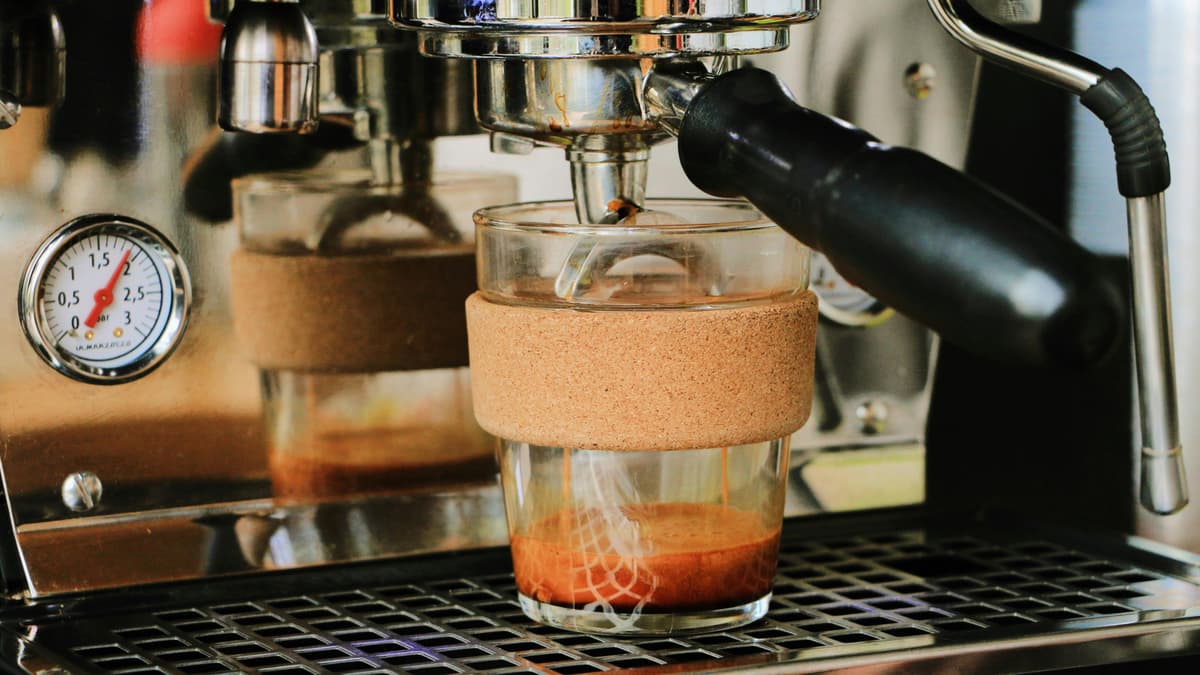
10 Espresso Beginner Mistakes (And How to Avoid Them)

Coffee obsessive and home roaster. Daily driver: a Gaggia Classic Pro and a single-dosing Mazzer Super Jolly.
Just so you know, some links on this page are affiliate links. If you buy something via them, we get a small kickback. You don't pay more, but it helps toward the beans.
Every beginner makes the same mistakes. The pattern is predictable enough that you can understand all of them before your first bag of beans. These problems account for the vast majority of frustration in the first four to six weeks, not equipment failure, not bad luck, just specific fixable errors that repeat across every beginner who has ever pulled a shot at home.
{{product:grinder-timemore-c3-esp-pro}}
Grinding too coarse
If your shot runs in under 20 seconds, you're grinding too coarse. This is the most common beginner mistake because it feels counterintuitive. You'd think choking the machine would be the bigger risk, but espresso actually requires surprisingly fine grounds to create proper resistance.
The symptoms are obvious once you know what to look for. Thin, watery crema. Light-coloured espresso that tastes sour and acidic. A shot that gushes through faster than you expected. All of these point to the same problem.
The fix is simple. Grind finer, one step at a time, testing after each adjustment. Target 18g in, 36g out, in 25-30 seconds. If you hit 35+ seconds, you've gone too fine and should back off slightly. Start with a known recipe and adjust grind to hit the time, not the other way around.
Not using a scale
"A good amount" isn't a recipe. Weigh your dose at 18g for standard double shots and your output at 36g for a 1:2 ratio. Eyeballing doesn't work because a 1-2g difference in dose changes extraction significantly.
Baristas consistently find that with the same beans, same grind, and same technique, a 17g dose versus a 19g dose produces noticeably different shots. The 19g tends to be over-extracted and bitter. Without a scale, you're guessing at a critical variable.
An inexpensive scale with 0.1g precision solves this completely. Weighing takes 10 seconds and eliminates guesswork. Make it part of your routine and it becomes automatic after a week.
Using stale beans
Coffee older than 3-4 weeks won't extract properly. Supermarket coffee is almost always too old because it sits on shelves for months. Stale beans produce little crema, flat lifeless taste, and inconsistent extraction no matter how good your technique.
The solution is buying from roasters rather than supermarkets. Check the roast date and use beans within 3-4 weeks. Store them in an airtight container away from light and heat. Buying smaller bags more frequently helps since 250g bags used within 2 weeks are better than 1kg bags that go stale before you finish them. Our espresso beans guide has specific UK roaster recommendations.
Cold portafilter
A cold portafilter drops extraction temperature significantly. Espresso extraction happens at 90-96°C, and a room-temperature portafilter at around 20°C pulls heat from the water, causing under-extraction and sour shots.
The difference is measurable. Same beans, same grind, same dose. Cold portafilter produces sour shots. Warm portafilter produces balanced shots. The fix takes 10 seconds: pull a blank shot of water through the portafilter to warm it, or store the portafilter on the machine between uses.
Inconsistent tamping
Tamp level and firm at about 30lbs of pressure. But the real key is tamping the same way every time. Inconsistent tamping creates uneven density in the coffee bed, leading to channeling where water finds easy paths through the puck.
The exact pressure matters less than consistency. 25lbs consistently is better than alternating between 20lbs and 40lbs. Signs of tamping problems include uneven extraction with spraying or spots, inconsistent shot times with the same grind setting, and visible channeling in the spent puck. Practice your technique until you can feel when you've hit the right pressure, and do it the same way every time.
Not waiting for temperature
Many machines need 15-20 minutes to stabilise temperature. That "ready" light lies because it only indicates boiler temperature, not group head temperature. The group head, portafilter, and other components need time to reach proper extraction temperature.
A machine turned on 5 minutes ago versus 20 minutes ago produces noticeably different shots with the same beans and technique. The insufficiently heated machine produces sour, under-extracted shots. Use a smart plug to turn the machine on automatically 20 minutes before you wake up, or turn it on first thing and prep everything else while it warms.
Ignoring channeling
Channeling happens when water finds easy paths through the coffee bed, over-extracting some areas while under-extracting others. The result is muddy, unbalanced shots that taste both bitter and sour simultaneously.
Signs include espresso that sprays or sputters during extraction, uneven flow favouring one side, visible holes in the puck after extraction, and that characteristic bitter-sour combination in the cup. The fix is improving distribution before tamping. Use a WDT tool to break up clumps, tap the portafilter to settle grounds, and ensure even coverage before you tamp. This takes 10 seconds and prevents most channeling issues.
Changing multiple variables at once
When your shot tastes sour, the instinct is to fix everything at once. You grind finer, increase the dose, and change the ratio. Now it's bitter, and you have no idea why. Three variables changed simultaneously makes diagnosis impossible.
Change one variable at a time. Sour shot? Grind finer while keeping dose and ratio the same. Still sour? Grind finer again. Now bitter? You've gone too fine, so back off one step. This systematic approach actually gets you to good espresso faster than random adjustments. Keeping a log of your dose, grind setting, output, time, and taste helps you track what works.
Cheap grinder, expensive machine
A common mistake is spending most of the budget on an impressive machine while pairing it with a budget grinder. The grinder is where the money matters most. Espresso extraction depends on consistent grind particle size, and cheap grinders produce inconsistent results that make dialling in impossible.
The evidence is clear: an expensive machine with a budget grinder loses to a mid-range machine with a quality grinder. Our grinder vs machine budget guide breaks this down in detail. Cheap grinders can't grind fine enough or adjust precisely enough. You'll hit a quality ceiling fast no matter how good your machine is.
Budget 40-50% of your total setup on the grinder. On a modest entry-level budget, that means putting roughly two-thirds toward the machine and the remaining third toward the grinder. Step up to a mid-range budget and the split holds, just with more headroom on both. A Baratza Encore ESP or a Timemore C3 ESP PRO are good starting points. *(Check Timemore)*
Giving up too early
Your first 20-30 shots will be bad. That's normal. Espresso has a learning curve, and you're developing muscle memory for dosing, distribution, tamping, and timing. This can't be skipped.
Community experience consistently shows the average time to first "good" shot is 20-30 attempts, with consistent good shots taking 50-100 attempts. Everyone goes through this. The first 10 shots are mostly terrible while learning basics. Shots 11-20 are occasionally decent as understanding develops. The breakthrough moment usually happens around shots 21-30. After that, you're building consistency and refining technique.
Set realistic expectations. Your first shots will be bad. Focus on learning rather than perfection, use a consistent recipe, change one variable at a time, and keep a log. The breakthrough will come.
Common misconceptions worth addressing
More pressure doesn't mean better tamping. Once you've compressed the grounds fully, more pressure does nothing. Consistency matters more than force. Finer grind doesn't automatically mean better espresso either since going too fine causes over-extraction and bitterness. You want the right grind for your dose and ratio, not the finest possible.
The idea that expensive machines make better espresso is also misleading. A mid-range machine paired with a solid grinder beats a pricier machine paired with a bargain-basement grinder. The grinder determines extraction quality more than any other factor. Ignoring water quality
Water makes up 90% of your espresso by volume. Hard water with high mineral content causes two problems: limescale builds up inside your machine (shortening its life), and the mineral profile affects extraction chemistry. Very hard water produces flat, chalky shots. Very soft water produces sharp, acidic shots.
Much of the UK has hard water, particularly in London, the South East, and East Anglia. Check your water supplier's website for hardness data. If you're above 200mg/l calcium carbonate, a simple Brita filter removes enough calcium to protect your machine without stripping the minerals that help extraction. Peak District and Scottish Highlands water is typically soft enough to use directly.
The real rule: if your tap water tastes good to drink, it will make good espresso. If it tastes metallic, chlorinated, or leaves visible scale on your kettle, filter it first. This applies to descaling too. Unfiltered hard water means descaling every 4-6 weeks. Filtered water extends that to every 2-3 months. Neglecting descaling is one of the most expensive beginner mistakes because limescale kills machines that would otherwise last a decade.
Cleaning neglect
The portafilter basket, the group head screen, and the shower screen all accumulate coffee oils that turn rancid within days. Rancid oils produce a stale, bitter undertone in every shot regardless of bean freshness or technique. A 30-second rinse after each session and a weekly backflush with espresso machine cleaner (around £7 for a year's supply) eliminates this entirely. If your shots gradually developed a persistent bitterness that wasn't there when the machine was new, dirty group head components are almost certainly the cause.
Common questions about beginner espresso mistakes
How do I know if my grinder is good enough for espresso?
If your grinder was designed for filter coffee or sits at the bargain-basement end of the market, it probably can't grind fine enough for espresso with non-pressurised baskets. Signs include shots that always run too fast no matter the setting, inability to make small grind adjustments, and inconsistent particle sizes visible in the grounds. The Timemore C3 ESP PRO is the minimum for serious espresso. *(Check Price on Amazon)*
Why do my shots taste both sour and bitter at the same time?
This usually indicates channeling, where water found easy paths through the coffee bed. Some areas over-extract producing bitterness while others under-extract producing sourness. Our sour vs bitter troubleshooting guide covers this in depth. The fix is better distribution before tamping. Use a WDT tool to break up clumps, ensure even coverage across the basket, and tamp level.
How long should I expect the learning curve to take?
Most people make their first genuinely good shot somewhere between attempt 20 and 30. Consistent good shots usually come after 50-100 attempts. This assumes you're using fresh beans, a capable grinder, and changing one variable at a time. Rushing the process by changing multiple variables at once actually slows learning down. If you want to understand the science behind it, the books in our reading list will accelerate your learning.
Should I buy a cheaper setup to learn on before upgrading?
It depends on the setup. A capable beginner setup like a Sage Bambino with a proper grinder will teach you everything you need to know. Starting with equipment that's too limited, like a blade grinder or pressurised-only machine, teaches bad habits rather than proper technique. Get equipment capable of making good espresso from the start.
Why does my espresso taste different every morning even when I don't change anything?
This is one of the most common beginner frustrations, and it's almost never your fault. Coffee is perishable. As a bag of beans ages, even across a single week, the CO₂ trapped inside escapes, changing how water flows through the puck. A dose and grind that worked perfectly on day three of a bag will often run long or taste flat by day twelve. Ambient humidity also plays a role: wetter air causes ground coffee to clump slightly, slowing extraction. The fix is to make one small grinder adjustment (half a step finer) as beans age, and to keep your beans in an airtight container away from light. Consistency improves dramatically once you understand that some daily variation is the coffee changing, not you making mistakes.
How do I know if my grinder is the problem?
If you've dialled in your dose and your grind setting, but shots still taste thin, sour, or wildly inconsistent, your grinder may be the limiting factor. A simple test: buy a shot of espresso from a good local coffee shop and ask them what grind setting and dose they use for that bean. If you can't replicate something close to their result on your machine, your grinder likely lacks the burr quality or stepless precision needed. Blade grinders are the worst offenders, they produce a mix of powder and large chunks that makes proper extraction impossible. If you're on a stepped entry-level grinder with coarse increments, upgrading to a stepless or finer-stepped model like the Timemore C3 ESP PRO will resolve more problems than any machine adjustment. It is almost always cheaper to fix a grinder problem with a better grinder than to buy a more expensive machine and expect it to compensate. The machine can only work with what the grinder gives it. Most espresso problems attributed to the machine are actually grinder problems in disguise, inconsistent particle size creates uneven extraction that no temperature control or pressure profiling can fully correct.
Free tools to help you improve
Use our free tools to speed up your learning:
The role of humidity and seasonal changes
Room temperature and humidity affect grind behaviour in ways that catch beginners off guard. During summer months or in humid environments, coffee absorbs moisture from the air and swells slightly, which effectively makes your current grind setting behave finer. Shots slow down for no apparent reason. The fix is grinding one notch coarser. In winter, dry indoor heating has the opposite effect , coffee stays drier and grinds effectively coarser, speeding up shots. Experienced home baristas adjust their grind setting seasonally as a matter of routine. If your shots suddenly change without an obvious cause, ambient conditions before grinder wear or machine issues are the first thing to check. - **Dial-In Help* - Quick fixes when shots taste wrong - *Shot Log** - Track what works so you can repeat it
For the full technique breakdown, see how to pull an espresso shot.
Not sure where to start with your setup?
If you're making consistent mistakes despite understanding the theory, the problem is almost always grind consistency. A blade grinder or cheap burr grinder produces uneven particle sizes that cause simultaneous over- and under-extraction, and no adjustment to dose or tamping pressure fixes a particle distribution problem. That's the grinder's job.
Find Your Perfect Setup
Answer a few quick questions and get personalised recommendations.
Start the QuizFrequently Asked Questions
Why is my espresso sour?
Under-extraction from too coarse a grind or too short a shot time. Grind finer and aim for 25-30 seconds extraction.
Why is my espresso bitter?
Over-extraction from too fine a grind or too long a shot. Grind coarser and target a 1:2 ratio (18g in, 36g out) in 25-30 seconds.
Why does my espresso taste watery?
Usually channeling - water finding easy paths through the puck. Improve distribution and tamp evenly. Also check your dose (18-20g is standard).
Related Guides
Ready to find your perfect setup?
Our quiz matches you with the right machine, grinder, and accessories.
Take the Quiz - It's FreeNo email required