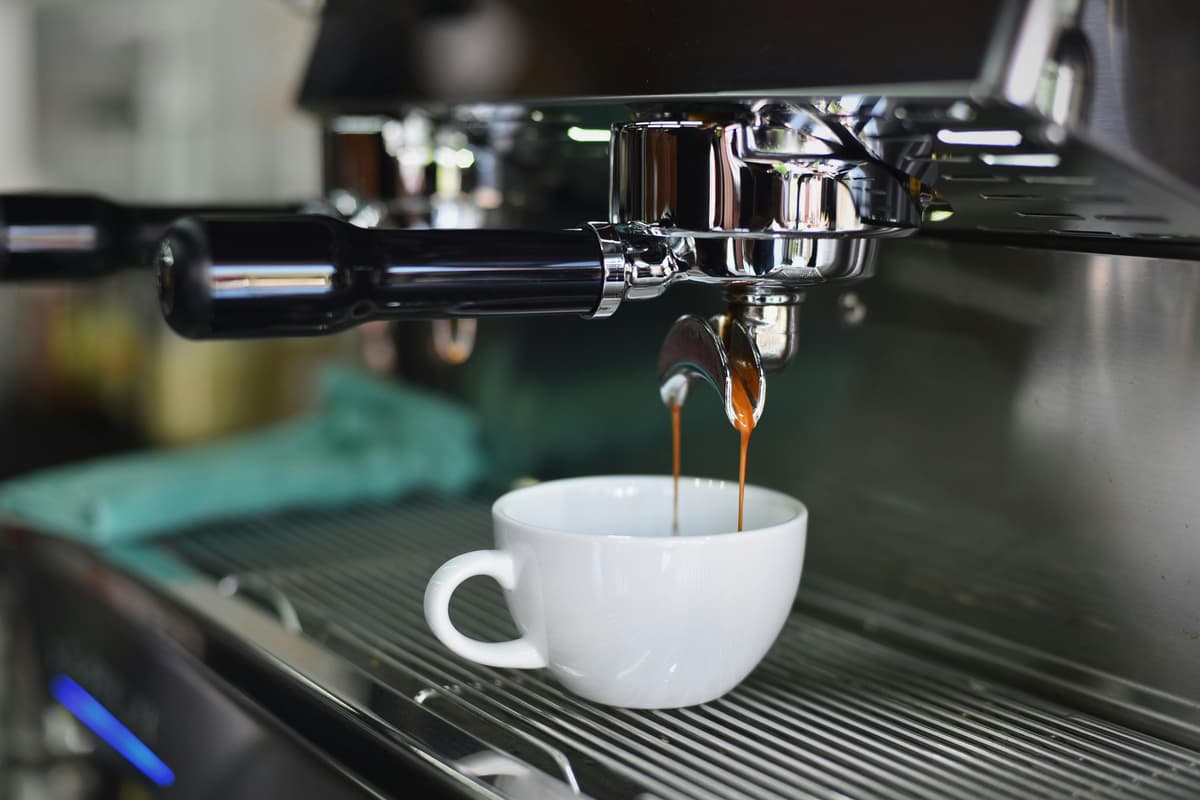
Breville Barista Sense Review: Hands-Free Frothing in Breville's Budget Line

Coffee obsessive and home roaster. Daily driver: a Gaggia Classic Pro and a single-dosing Mazzer Super Jolly.
Just so you know, some links on this page are affiliate links. If you buy something via them, we get a small kickback. You don't pay more, but it helps toward the beans.
If you want proper milk drinks at home without spending weeks learning a steam wand, the Breville Barista Sense is the one to get in Breville's budget Barista line. It builds in a conical grinder and a 58mm portafilter like its cheaper sibling the Classic, then adds the part that actually changes your mornings: the TempSense wand froths your milk to temperature and stops on its own.
A quick note on the name, because it trips people up. In the UK the premium machines are branded Sage (the Bambino, the Barista Express). The Barista Sense belongs to Breville's separate, more affordable line (Slimline, Classic, Sense). Same parent company, cheaper machines, different positioning. I have not had one on my own bench, so everything below comes from the manufacturer spec, the Amazon UK listing, and the way this class of machine behaves.
Is the Breville Barista Sense worth it?
Yes, if you make milk drinks. You get a built-in conical grinder, a 58mm commercial-size portafilter and hands-free frothing in one machine, so you pull a flat white without buying a separate grinder or learning the wand.
That is the whole pitch, and it is a good one for the right person. Most machines at this price make you choose: either a grind-and-froth-it-yourself setup where you buy a grinder on top, or a bean-to-cup that hides the espresso behind a button. The Sense keeps the 58mm portafilter and the puck, so you are still making real espresso, but it does the grinding and the milk for you. For a first proper machine aimed at lattes and flat whites, that combination is hard to argue with.
Where it is not the right call: if you drink mostly straight espresso, you are paying for milk automation you will rarely use, and the cheaper Classic gives you the identical shot. More on that next.
What the Barista Sense gets you over the cheaper Classic
One thing: the steam wand. Both machines share the grinder, the Auto Dose and the 58mm portafilter, so the only real difference is how you froth milk.
Here is how the two Breville budget machines line up on the parts that differ.
| Feature | Barista Classic (VCF186) | Barista Sense (VCF187) |
|---|---|---|
| Steam wand | Manual Cool Touch wand | TempSense, hands-free to a set temperature, four settings, plus manual HI/LO |
| Built-in grinder | Conical burr, Auto Dose | Conical burr, Auto Dose |
| Portafilter | 58mm | 58mm |
| Pump | 15 bar | 15 bar |
| Cleaning | One-touch | One-touch |
| Best for | Straight espresso, or learning to steam by hand | Milk drinks with no steaming learning curve |
So the decision is simple. If milk drinks are the reason you are buying a machine, the Sense is worth the step up, because the TempSense wand is the feature that removes the hardest beginner skill. If you drink espresso black, or you actively want to learn to steam milk by hand, save the money and get the Barista Classic. You can see them side by side in the Classic vs Sense comparison.
How the TempSense steam wand works
You set a target temperature, drop the wand into the jug, and it froths and then stops on its own when the milk reaches temperature. Four temperature settings cover dairy and the non-dairy milks that scorch easily.
That is genuinely useful for a beginner. Temperature is the thing people get wrong first, either scalding the milk or pulling it out cold, and a wand that stops itself takes that mistake off the table. Oat and soy also behave better when you can hold them below the point where they split, which the lower settings are there for.
The part I like is that it is not locked into automatic. The Sense also has manual HI and LO pressure settings, so once you want to learn proper texturing you can steam by hand like you would on any traditional machine. The automatic mode is consistent and forgiving, which is the point of it, though it will not teach you free-pour latte art the way a fully manual wand will. Start on auto, move to manual when you are ready. The machine grows with you rather than capping you on day one.
Barista Sense vs Sage Bambino Plus
If you want a grinder in the box, buy the Sense. The Sage Bambino Plus has no built-in grinder, so you would need to buy one separately, which changes the real cost of getting started.
This is the cross-shop most people actually face at this price, so be honest about the trade. The Bambino Plus is the more proven machine, with years of owners behind it and the premium Sage build, and its automatic milk is excellent. But it is espresso-and-steam only: you supply the grind. The Sense is newer and sits in the budget line, but it is a complete one-box setup, grinder included.
For most people who just want to start making café drinks without assembling a setup, the Sense is the simpler answer. If you already own a decent grinder, or you plan to buy one you can grow into, the Bambino Plus is the safer long-term machine and you skip the Sense's built-in grinder entirely.
Who should buy the Barista Sense, and who should not
Buy it if you want café milk drinks from a single machine with no steaming learning curve and no separate grinder to source. That is exactly who this machine is built for.
Skip it if you drink mostly straight espresso, in which case the cheaper Classic is the smarter buy, or if you are the kind of person who wants to learn manual steaming and dial in on a bare machine from day one. For that path, a traditional machine like the Gaggia Classic Pro paired with your own grinder will teach you more, even if it asks more of you.
What to know before you buy
Two things to go in knowing. It is Breville's budget line, not the premium Sage build the brand is better known for, and it is new enough that long-term reliability is still unproven.
Neither is a dealbreaker, they are just the reason it costs what it costs. Treat it like any single-boiler machine and it will serve you well: pull your shot first, then flip to steam and give the boiler a few seconds to come up, because a single boiler does one job at a time. Run the one-touch clean cycle when it asks, which is what keeps the pour consistent over the years. And remember the auto froth is a floor, not a ceiling, so switch to the manual HI and LO settings the moment you want to push your milk technique further.
What I'd buy today
For most people who want lattes and flat whites at home without a second appliance or a steep learning curve, the Barista Sense is the Breville budget machine to get. Set the froth temperature, let it handle the milk, and you are pulling proper café drinks on a 58mm setup the morning it lands on your counter. Get the Breville Barista Sense on Amazon.
As an Amazon Associate, we earn from qualifying purchases.
Products Mentioned in This Guide
Find Your Perfect Setup
Answer a few quick questions and get personalised recommendations.
Start the QuizFrequently Asked Questions
Where can I buy the Breville Barista Sense?
On Amazon UK and from UK retailers like Currys. It is a UK and EU model (VCF187), so there is no Amazon US listing: the US Breville range is the Barista Express, Pro and Touch instead.
What is the difference between the Barista Sense and the Barista Classic?
The steam wand. Both share the 58mm portafilter, built-in conical burr grinder and Auto Dose. The Classic has a manual Cool Touch wand you control yourself; the Sense adds the TempSense wand, which froths hands-free to a set temperature across four settings, or switches to manual HI/LO pressure when you want control.
Is the TempSense steam wand good for beginners?
Yes. Set a temperature and the wand froths and stops on its own, so you get consistent microfoam without learning steaming technique. When you want to develop the skill, the HI/LO manual pressure settings let you steam by hand.
Does the Barista Sense have a built-in grinder?
Yes, a conical burr grinder with Auto Dose that grinds straight into the portafilter and doses the right amount, with anti-static technology to keep grounds off the counter. You do not need a separate grinder to start.
Is the Barista Sense worth it over the cheaper Classic?
If you mainly drink milk drinks, yes: the hands-free TempSense frothing is the reason to step up. If you drink mostly straight espresso, or want to learn manual steaming from day one, the cheaper Classic gives you the same shot and the same grinder.
Is the Barista Sense a Sage machine?
No. In the UK the premium line is Sage (Bambino, Barista Express). The Barista Sense belongs to Breville's separate, more affordable Barista range (Slimline, Classic, Sense). Same parent company, different line.
Related Guides
Breville Barista Classic Review: The Cheaper Barista with the Same Grinder
ComparisonBreville Barista Classic vs Sense: Which Budget Breville to Buy
Buying GuideSage Bambino Plus Review: The Beginner's Best Friend?
Buying GuideBest Coffee Machine UK 2026: Complete Buyer's Guide
Buying GuideBest Bean-to-Cup Coffee Machine UK 2026
Ready to find your perfect setup?
Our quiz matches you with the right machine, grinder, and accessories.
Take the Quiz - It's FreeNo email required