Best Coffee Grinder UK 2026: From Budget to Premium
Coffee obsessive and home roaster. Daily driver: a Gaggia Classic Pro and a single-dosing Mazzer Super Jolly.
Just so you know, some links on this page are affiliate links. If you buy something via them, we get a small kickback. You don't pay more, but it helps toward the beans.
The grinder is where your coffee is made or broken. Not the machine, not the beans, not the water temperature. The grinder. A good hand grinder paired with a decent machine will produce better coffee than a far pricier machine saddled with a blade grinder every single time. This isn't opinion - it's physics. Consistent particle size means even extraction, and even extraction means coffee that actually tastes like the tasting notes on the bag.
The UK grinder market has more good options than ever, which makes choosing harder. This guide covers every price point, from basic entry grinders to serious enthusiast machines, for espresso, filter, and everything in between. Every grinder here is available in the UK with proper warranty support.
Quick Picks
| Grinder | Type | Best For | |
|---|---|---|---|
| KINGrinder K6 | Manual | Budget espresso | Check Price on Amazon |
| Timemore C3 ESP PRO | Manual | Best value espresso | Check Price on Amazon |
| Baratza Encore ESP | Electric | Best budget electric | Check Price on Amazon |
| Sage Smart Grinder Pro | Electric | All-rounder | Check Price on Amazon |
| 1Zpresso J-Ultra | Manual | Rivals enthusiast electrics | Check Price on Amazon |
| DF64 Gen 2 | Electric | Best value 64mm flat | Check Price on Amazon |
| Eureka Mignon Zero | Electric | Zero-retention single-dose | Check Price on Amazon |
| Eureka Mignon Specialita | Electric | Serious espresso | Check Price on Amazon |
| Niche Zero | Electric | Endgame grinder | Check Price at Niche |
Prices shown are approximate at time of review. Click "Check price" for current pricing.
These picks come from cross-referencing expert reviews (Which?, James Hoffmann, coffeeblog.co.uk) with real user feedback from r/espresso and r/Coffee. Updated monthly as prices shift.
What actually matters in a grinder
Before getting into specific models, here's what separates a good grinder from a bad one.
Burr type matters more than brand. Steel conical burrs are the standard for home espresso. They're quieter than flat burrs, run cooler, and produce good results across the price spectrum. Flat burrs grind more uniformly and produce cleaner flavour clarity, but you need to be into enthusiast territory before the difference becomes meaningful. Ceramic burrs (found in cheap grinders) wear faster and produce less consistent particles.
Stepped vs stepless adjustment. Stepped grinders click between fixed positions. Stepless grinders let you adjust infinitely. For espresso, stepless is better because you need micro-adjustments to dial in. For filter coffee, stepped is fine - the margin for error is wider. Most budget-to-mid-range grinders are stepped.
Retention kills freshness. Grounds that stay trapped inside the grinder go stale and contaminate your next dose. Single-dose grinders (load exactly what you need) have near-zero retention. Hopper grinders (load a full bag) retain 1-5g depending on the model. This matters most if you switch beans often.
Motor speed affects heat. Fast-spinning burrs generate heat, which can slightly alter coffee flavour. Low-RPM grinders and manual grinders run cool. At home volumes (a few doses per day), motor heat is honestly negligible. Don't let this factor drive a decision.
Budget manual grinders (under £100)
Manual grinders offer the best grind quality per pound spent. The trade-off is physical effort: 30-60 seconds of hand-cranking per dose. For one or two drinks a day, most people find this tolerable. For a household making four or five drinks each morning, it gets old.
Best budget pick: [Timemore C3 ESP PRO](https://www.amazon.co.uk/dp/B0CC4ZB7XR?tag=espressoadvice-21&ascsubtag=best-coffee-grinder-uk) (the budget benchmark)
The C3 ESP PRO is the cheapest grinder we'd recommend for espresso without hesitation. The S2C steel burrs produce genuinely consistent particles at espresso fineness. Full metal body. Stepless adjustment for precise dialling. Zero retention because what goes in comes straight out.
It handles filter coffee too, though the adjustment range is optimised for espresso-fine grinds. If you only brew filter, there are better options. For espresso on a budget, this is the one.
The grinding action takes about 30-40 seconds per 18g dose. Some people find the morning ritual meditative. Others find it annoying before their first caffeine hit. Be honest with yourself about which camp you're in before committing.
Also worth considering: [KINGrinder K6](https://www.amazon.co.uk/dp/B0CY1XFXB8?tag=espressoadvice-21&ascsubtag=best-coffee-grinder-uk) (a notch below the Timemore)
The K6 has 240 adjustment settings, which is unusual at this price. Stainless steel conical burrs, metal construction, and good build quality for the money. It's slightly newer to the UK market than Timemore, so the long-term reliability data isn't as deep. But early feedback on r/espresso is positive, and the grind quality is competitive with the Timemore at a lower price.
What about the Hario Mini Mill?
The Hario Mini Mill Plus at its rock-bottom price is tempting. Thousands of reviews, Amazon's Choice badge, incredibly cheap. But ceramic burrs and a basic adjustment mechanism mean inconsistent particles, especially at espresso fineness. Fine for French press or pour-over. For espresso, you'll spend weeks trying to dial in and never quite get there. The modest step up to a Timemore or KINGrinder is money well spent.
Budget electric grinders (£100-200)
Electric grinders trade money for convenience. Press a button, get grounds. No arm workout required. At this price point, you're getting capable entry-level performance that won't hold you back for the first year or two of your espresso journey.
Best budget electric: [Baratza Encore ESP](https://www.amazon.com/dp/B0BW272XCV?tag=espressoadvice-20&ascsubtag=best-coffee-grinder-uk) (the budget electric to beat)
The Encore ESP exists because the standard Encore couldn't grind fine enough for espresso. Baratza fixed that with 40 micro-step adjustments calibrated specifically for espresso extraction. The 40mm conical steel burrs produce consistent particles that punch above this price point.
Two things set Baratza apart from cheaper electrics. First, their customer service is genuinely excellent - they'll troubleshoot problems over the phone and sell individual replacement parts at reasonable prices. Second, the grinder is designed to be serviced at home. Burrs wear out after a few years. On a Baratza, you swap them yourself cheaply. On most competitors, you bin the grinder.
The main limitation is retention. A gram or so of grounds stays in the chute between doses. For most home users making one or two drinks daily, this is barely noticeable. If you switch beans frequently, purge a few grams before your first shot of the day.
Best all-rounder: [Sage Smart Grinder Pro](https://www.amazon.com/dp/B00OXGXW8O?tag=espressoadvice-20&ascsubtag=best-coffee-grinder-uk) (the versatile mid-range pick)
If you brew both espresso and filter, the Sage Smart Grinder Pro covers both well. 60 grind settings from Turkish-fine to French press-coarse. The LCD display shows grind time and dose, which helps with consistency. Pairs naturally with Sage espresso machines if that's your setup.
The stepped adjustment means you can't micro-adjust as precisely as stepless grinders, but 60 steps is enough for most people to find their sweet spot. The dosing timer is surprisingly useful once you dial it in - set your preferred grind time and get consistent doses without weighing every time (though we'd still recommend weighing for espresso).
Three-year UK warranty from Sage is a bonus. Parts and service are easy to arrange through Sage's UK support.
The design option: [Fellow Opus](https://coffeehit.co.uk/products/fellow-opus-burr-grinder?aff=115) (the style-led pick)
Fellow makes beautiful coffee equipment, and the Opus is no exception. 41 grind settings, anti-static technology (less mess), and genuinely quiet operation. It handles both espresso and filter competently.
The catch: it's not as espresso-focused as the Baratza or Sage. The adjustment steps in the espresso range are wider, making fine-tuning trickier. If espresso is your primary focus, the Encore ESP or Sage are better choices at similar money. If you split between espresso and filter and care about aesthetics on your countertop, the Opus earns its keep.
What about the Sage Dose Control Pro?
The Sage Dose Control Pro is Sage's budget entry. It works, but the slightly dearer Smart Grinder Pro gives you nearly twice the grind settings and a better overall experience. The Dose Control Pro feels like a compromise - if you're spending Sage money, go for the Smart Grinder Pro.
Premium manual grinders (£150-250)
This is where manual grinders get interesting. At this price, hand grinders genuinely compete with electric grinders costing twice as much. The burrs are bigger, the tolerances are tighter, and the grind quality is noticeably better than budget manuals.
Best premium manual: 1Zpresso J-Ultra (the premium manual benchmark)
The J-Ultra is the grinder that converts a lot of people from "manual grinders are a compromise" to "manual grinders are genuinely better." The 48mm titanium-coated conical burrs are large for a hand grinder, and the external numerical dial (8 microns a click, 500 stops across five rotations) gives you stepless-level precision.
Grind quality genuinely rivals far pricier enthusiast electric grinders. This isn't marketing hyperbole - blind taste tests on r/espresso consistently show people can't distinguish 1Zpresso J-series shots from Eureka Mignon shots. The difference is you're providing the motor power instead of a plug socket.
Zero retention. Dead silent. No counter space required (lives in a drawer). Grinds an 18g dose in about 25-30 seconds, which feels faster than you'd expect because the large burrs chew through beans quickly.
Also worth considering: [Timemore C3S Pro](https://www.amazon.co.uk/dp/B0CC4Z32F8?tag=espressoadvice-21&ascsubtag=best-coffee-grinder-uk) (a more affordable step-up manual)
Sits between the budget C3 ESP PRO and the premium J-Ultra. Better burrs than the C3, smoother grinding action, and more premium build with a folding handle. If the J-Ultra is more than you want to spend but the basic C3 feels limiting, this fills the gap well.
Mid-range electric grinders (£200-400)
This tier is where electric grinders start matching what premium hand grinders can do. You're paying for convenience, speed, and the ability to grind for a full household without developing a forearm like Popeye.
Best mid-range: [Baratza Sette 270](https://coffeehit.co.uk/products/baratza-sette-270?aff=115) (the mid-range workhorse)
The Sette 270 is a favourite on r/espresso for good reason. 270 grind settings (macro and micro adjustment), fast grinding at 3.5-5.5g per second, and remarkably low retention at around 0.5g. It grinds directly into your portafilter, which simplifies the workflow.
The unique design puts the outer burr ring spinning around a stationary inner cone, which is the opposite of most grinders. This means grounds drop straight through with almost no retention. For single-dosing, it's one of the best electrics short of enthusiast money.
The trade-off is noise. It's louder than competitors at this price. And some users report the gearbox can develop issues after a couple of years of heavy use. Baratza's service makes this manageable, but it's worth knowing.
For specialist retailers with proper advice and support, Coffee Hit carries the full Baratza range with UK warranty.
The quiet option: Eureka Mignon Silenzio (the hushed mid-range pick)
If you live with light sleepers or grind early in the morning, the Eureka Mignon Silenzio earns its name. Stepless adjustment, 50mm flat burrs, and a noise level that won't wake the house. Available from specialist coffee retailers in the UK.
The Mignon range shares a body design across multiple models. The Silenzio is the entry point, with the Specialita and Oro above it. All are well-built Italian machines that'll last a decade or more with basic maintenance.
Single-dose option: [DF64 Gen 2](https://www.amazon.com/dp/B0D962ZSCM?tag=espressoadvice-20&ascsubtag=best-coffee-grinder-uk) (the upper-mid single-doser)
The DF64 Gen 2 improves on everything that made the original popular. 64mm flat burrs at a price point that used to only get you 50mm conicals. Better burr alignment, improved anti-static, and reduced retention over Gen 1. Single-dose design with bellows for near-zero waste. The stock burrs are good, and you can upgrade to SSP or Italmill burrs later for a significant quality jump.
Build quality is functional rather than refined, it doesn't have the Italian elegance of a Eureka. But for grind quality per pound, it's hard to beat. The large flat burrs produce noticeably cleaner, more defined flavour than conical grinders at similar prices. The modding community is active too, upgraded burrs, 3D-printed accessories, and workflow improvements are well-documented on r/espresso.
Zero-retention option: [Eureka Mignon Zero](https://www.amazon.co.uk/dp/B0CBNGZBGS?tag=espressoadvice-21&ascsubtag=best-coffee-grinder-uk) (the upper-mid zero-retention pick)
The Mignon Zero is Eureka's answer to the single-dose trend. 55mm flat burrs with stepless adjustment, near-zero retention, and the same whisper-quiet operation the Mignon platform is known for. Italian build quality that'll last a decade.
Where the DF64 wins on raw grind quality (bigger burrs = more uniformity), the Mignon Zero wins on refinement. Quieter, better-looking, and built with Eureka's decades of manufacturing experience. If you switch beans daily and hate waste, the near-zero retention is the headline feature. If you want maximum grind quality for the money and don't mind a more industrial aesthetic, the DF64 is better value.
The Mignon Zero sits neatly between the Specialita (hopper-based, not single-dose) and the Niche Zero (more expensive, conical burrs). It fills a gap that's been empty for too long, a properly designed single-dose flat burr grinder from a premium brand at a competitive price.
Enthusiast grinders (£400+)
This is endgame territory. These grinders are good enough that the grinder stops being the limiting factor in your setup. Upgrade beyond this and you're chasing the last 5% of quality, which most people can't taste.
Best enthusiast electric: [Eureka Mignon Specialita](https://www.amazon.com/dp/B07GFV6HM8?tag=espressoadvice-20&ascsubtag=best-coffee-grinder-uk) (the enthusiast electric pick)
The Specialita adds a touchscreen display and timed dosing to the Mignon platform. The 55mm flat burrs with stepless adjustment produce clean, consistent espresso grounds. Near-zero retention. Whisper-quiet operation. Italian build quality that ages well.
This is where many home baristas stop upgrading. The Specialita handles everything from light single-origin espresso to dark blends without complaint. The timed dosing means you can set it and walk away - it'll stop at your target dose automatically.
The only real limitation is the hopper design. It's not a true single-doser, so switching beans means purging. If you switch beans daily, consider the DF64 or Niche instead.
The endgame: [Niche Zero](https://www.nichecoffee.co.uk/products/niche-zero?aff=175) (the premium endgame splurge)
The Niche Zero became a cult favourite because it solved the problems other grinders didn't. True zero retention - every ground goes into the cup, nothing stays behind. Single-dose by design, so you weigh your beans, drop them in, and get exactly that amount out. Switch between espresso and filter by just changing the dial, with no waste. Its closest single-dose rival is Eureka's flat-burr Oro, and I compare the two directly in the Niche Zero vs Eureka Mignon Oro Single Dose guide.
The 63mm Mazzer conical burrs produce a rich, textured shot that's different from flat-burr clarity. Whether you prefer that or not is genuinely personal taste, not a quality issue. Some people love the body and sweetness conical burrs bring. Others prefer the clean definition of flat burrs.
The Niche is only available direct from their website, not through Amazon or other retailers. UK-based company with good customer support. Lead times vary but have improved since the early days.
If this is your first grinder, the Niche is overkill. If you've been through a budget grinder and know you're in this for the long haul, it's the kind of purchase you make once and never revisit.
The wild card: ex-commercial grinders
This is the option nobody talks about in buying guides, and it's what I actually use daily. A second-hand commercial grinder from eBay, Gumtree, or the Coffee Forums UK classifieds will outgrind almost anything on this list for a fraction of the retail price.
The Mazzer Super Jolly is the classic example. Cafes cycle through these every few years, and they end up on eBay for a fraction of their original cost. That gets you 64mm flat burrs designed to grind hundreds of doses per day, built into a chassis that weighs about 12kg and will outlive you. The grind quality absolutely destroys anything in the enthusiast price bracket bought new. Based on everything in the secondhand market, this is the best value purchase in an espresso setup. I make the full case in my commercial grinder vs single-dose breakdown, and if you'd rather buy new, the best single-dose grinder guide has the purpose-built picks.
Other ex-commercial models worth searching for: the Mazzer Mini (smaller footprint, 58mm flat burrs, more affordable used), Compak K3 or K6 (solid workhorses, mid-priced used), and Anfim grinders (less common but excellent when you find them). Mahlkonig EK43s occasionally appear but command higher prices even used.
What to look for when buying used:
The burrs are the main wear item. On a Mazzer Super Jolly, replacement burrs are inexpensive and take ten minutes to swap. If the grinder has been in a busy cafe for 3+ years, budget for new burrs. The motor and body are essentially indestructible - Mazzers from the 1990s still work fine with fresh burrs.
Check that the adjustment collar moves smoothly and that the motor spins freely. Look for signs of coffee oil buildup (cleanable) versus actual mechanical damage (rare). Ask why it's being sold - cafes upgrading equipment is the ideal answer.
The trade-offs are real:
Commercial grinders are big. The Super Jolly is about 18cm wide and 58cm tall with the hopper. It weighs 12kg. If your kitchen is tight, this isn't practical.
They're loud. Cafe-grade motors aren't designed for quiet suburban mornings. Your household will know when you're making coffee.
Most come with a doser - a mechanical chamber that dispenses pre-ground portions. Dosers retain stale grounds. Many home users either remove the doser and fit a direct-grind chute, or accept purging a gram before each shot. Doserless conversions take about an hour with parts from eBay or Etsy.
Is this for you?
If you want the absolute best grind quality for the money, don't mind the size and noise, and enjoy the satisfaction of using proper cafe equipment at home, an ex-commercial grinder is the smartest purchase in coffee. It's not for everyone - but for the right person, a used Mazzer makes a comparable new grinder look like a waste of money.
Search "Mazzer Super Jolly" on eBay UK, Gumtree, or the Coffee Forums UK classifieds. Stock rotates constantly, so set up saved searches with alerts.
Choosing by brew method
Different brewing methods need different things from a grinder. Here's a quick guide:
Espresso only: You need fine grind capability and precise adjustment. The Baratza Encore ESP (budget electric), Timemore C3 ESP PRO (budget manual), or 1Zpresso J-Ultra (premium manual) are all designed specifically for espresso. The Eureka Mignon range (mid to high) excels here. For more affordable grinders specifically, our espresso grinder under £200 guide goes deeper.
Filter only (pour-over, French press, Aeropress): The grind window is more forgiving. A Sage Smart Grinder Pro or Fellow Opus handles filter well. You can spend less than espresso demands because consistency matters less when water contact time is longer.
Both espresso and filter: This is the hardest brief to fill. Grinders optimised for espresso often struggle at coarser settings, and vice versa. The Sage Smart Grinder Pro (the mid-range all-rounder) handles both reasonably. The Niche Zero was literally designed for this exact use case. The Fellow Opus works if neither brew method needs to be perfect.
AeroPress and Moka pot: These sit between espresso and filter. Most grinders in this guide cover the range. Don't overthink it.
What to avoid
Blade grinders. They chop beans randomly instead of grinding to a consistent size. The resulting brew is simultaneously under-extracted (large pieces) and over-extracted (dust). You cannot make good espresso with a blade grinder. For filter coffee, a blade grinder produces mediocre results at best.
The cheapest electric burr grinders. They exist on Amazon with thousands of reviews and low prices. Most have basic ceramic burrs that can't grind fine enough for espresso and produce inconsistent particles at every setting. The Melitta Calibra is better than most in this range but still limited for espresso.
The cheapest hand grinders. The Hario Mini Mill and its clones are affordable but the grind quality simply isn't there for espresso. The ceramic burrs wear quickly and the adjustment mechanism is imprecise. Save the money and put it toward a Timemore or KINGrinder.
Built-in grinders on cheap machines. The grinder in a budget bean-to-cup machine is heavily compromised. These machines make acceptable coffee through convenience, not grind quality. Don't buy a machine for its grinder unless you're well into premium territory.
UK buying tips
Amazon UK has the widest range and easy returns. For entry-level grinders (Timemore, KINGrinder, Baratza Encore ESP), Amazon is fine. If you're also choosing a machine, our budget espresso machine guide pairs grinders with machines at every price point.
For mid-range and premium grinders, specialist retailers offer better service. Coffee Hit stocks Baratza, Eureka, and Fellow with proper UK support and advice. They'll help you choose and back it up with warranty service that Amazon can't match.
The Niche Zero is only available direct from nichecoffee.co.uk. No third-party sellers.
Best times to buy: Black Friday (November) typically brings 15-20% off Sage and Baratza. Amazon Prime Day (July) occasionally discounts Timemore and budget options. January sales are hit-and-miss for grinders but worth checking.
Hard water affects grinders less than machines, but burrs still benefit from occasional cleaning. A brush and some Grindz tablets every few months keeps things running well.
Frequently asked questions
What's the best coffee grinder for home use UK?
For espresso: Baratza Encore ESP (budget electric) for electric convenience, Timemore C3 ESP PRO (budget manual) for manual value. For filter: Fellow Opus (the style-led pick) or Sage Smart Grinder Pro (the mid-range all-rounder). For both: Sage Smart Grinder Pro or Niche Zero if budget allows.
Is a manual or electric grinder better?
Manual grinders give better grind quality per pound. A budget Timemore matches electrics costing several times more. But you'll spend 30-45 seconds hand-grinding each dose, and it requires physical effort. Electric makes sense if you make 3+ drinks daily, grind for multiple people, or just want to press a button before your first coffee.
How much should I spend on a coffee grinder UK?
The budget-to-mid range gets you genuine quality that won't hold you back. At the rock-bottom end, grind consistency drops sharply and you'll fight the equipment. Up in enthusiast territory, improvements become subtle. The sweet spot for most people is a solid mid-range electric or a quality budget manual.
Do I really need a burr grinder?
For espresso, yes. Blade grinders produce wildly uneven particles that make consistent extraction impossible. For filter coffee, a burr grinder still helps noticeably but the difference is less dramatic. If you're only making French press, a blade grinder works in a pinch. For anything else, burr is the way.
What's the difference between flat and conical burrs?
Conical burrs are quieter, run cooler, and produce a more textured, full-bodied shot. Flat burrs grind more uniformly and produce cleaner, more defined flavour separation. At budget-to-mid home grinder prices, conical tends to outperform. Once you reach enthusiast prices, flat burrs start pulling ahead. Both produce excellent coffee - it's a preference, not a quality hierarchy.
---
Not sure which grinder suits your setup? Take our quiz for a personalised recommendation based on your budget, brew method, and how you make coffee.
Take the Espresso Setup Quiz →
What You'll Need With It
A grinder without a scale is only half the equation. Consistent dose weight — to the gram — makes your grind adjustments meaningful. Without it you're chasing two variables at once.
Fresh beans let you hear what the grinder is actually doing. Super Crema's consistency across a range of grind settings makes it ideal for dialling in a new grinder — you're adjusting technique, not compensating for the roast.
Shopping for a present? A grinder is one of the best upgrades you can give a coffee lover who still buys pre-ground. The gifts for coffee lovers guide rounds up the hand grinders that make the safest gifts, along with what to avoid.
What You'll Need With It

Spring-loaded tamper that ensures consistent 30lb pressure every time. Takes the guesswork out of tamping for beginners.

Budget-friendly espresso scale with 0.1g precision and built-in timer. Excellent value for home baristas.
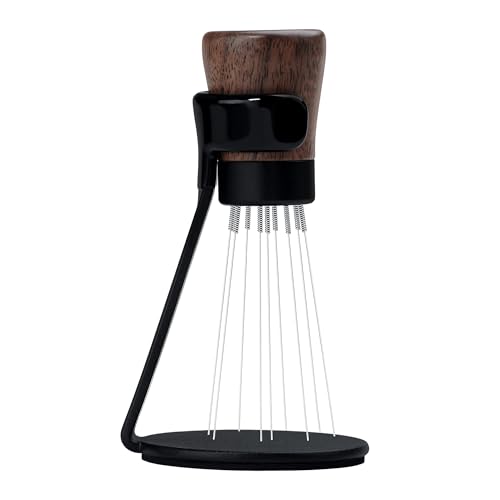
Weiss Distribution Technique tool with precision needles. Breaks up clumps and ensures even distribution for better extractions.
As an Amazon Associate, we earn from qualifying purchases.
Products Mentioned in This Guide
Find Your Perfect Setup
Answer a few quick questions and get personalised recommendations.
Start the QuizFrequently Asked Questions
What's the best coffee grinder for home use UK?
For espresso: Baratza Encore ESP for electric, Timemore C3 ESP PRO for manual. For filter: Fellow Opus or Wilfa Svart. For both: Sage Smart Grinder Pro.
Is a manual or electric grinder better?
Manual grinders offer better grind quality per pound spent. A Timemore matches £200+ electrics. But you'll spend 30-45 seconds hand-grinding each dose. Electric is better if you make 3+ drinks daily or value convenience.
How much should I spend on a coffee grinder UK?
£80-160 gets genuine quality. Below £50, grind consistency drops sharply. Above £400, you're in enthusiast territory with diminishing returns for most people. Budget 40-50% of your total setup cost on the grinder.
Do I really need a burr grinder?
For espresso, absolutely yes. Blade grinders produce wildly uneven particles that make consistent extraction impossible. For filter coffee, a burr grinder still helps but the difference is less dramatic.
What's the difference between flat and conical burrs?
Conical burrs are quieter, run cooler, and tend to produce a more textured shot. Flat burrs grind more uniformly and produce a cleaner, more defined flavour. At home grinder prices, both work well. Flat becomes meaningfully better above £300+.
Related Guides
Best Espresso Grinder Under £200 UK (2026)
How-ToYour Grinder Matters More Than You Think
ComparisonManual vs Electric Coffee Grinder for Espresso
Buying GuideShould You Spend More on Grinder or Machine?
Buying GuideBest Coffee Machine UK 2026: Complete Buyer's Guide
Buying GuideBest Coffee Grinder 2026: Budget to Premium Picks
Ready to find your perfect setup?
Our quiz matches you with the right machine, grinder, and accessories.
Take the Quiz - It's FreeNo email required