Bean to Cup vs Manual Espresso: Honest Comparison

Coffee obsessive and home roaster. Daily driver: a Gaggia Classic Pro and a single-dosing Mazzer Super Jolly.
Just so you know, some links on this page are affiliate links. If you buy something via them, we get a small kickback. You don't pay more, but it helps toward the beans.
Manual espresso produces better coffee. Bean-to-cup produces coffee with less effort. Neither fact cancels the other out. The question is whether the quality difference is worth the daily time and skill investment required to achieve it, and that depends entirely on how you use your machine and who else in the household uses it.
Quick picks
Not sure which setup is right for you?
Take Our QuizBean to Cup vs Manual Espresso: Full Picture
| Feature | Option A | Option B | Why It Matters | Our Verdict |
|---|---|---|---|---|
| Price range | Entry to premium | Mid-range to prosumer, plus grinder | Total cost | Depends on model |
| Daily effort | Press one button | 5-10 minutes | Morning commitment | Bean to cup easier |
| Shot quality ceiling | Good (limited control) | Excellent (full control) | Coffee quality | Manual wins |
| Milk drinks | Built-in auto-froth | Separate learning | Ease for lattes | Bean to cup easier |
| Maintenance | Monthly deep clean | Daily backflush | Upkeep effort | Manual simpler daily |
Based on everything we've researched, manual espresso produces better coffee. Bean-to-cup produces more coffee with less effort. Neither fact makes the other approach wrong.
Understanding what each type actually does
Bean-to-cup machines combine a grinder, brewing system, and often a milk frother into a single unit. Press a button, and the machine grinds fresh beans, doses the coffee, tamps it, extracts the shot, and sometimes textures milk automatically. Total time from bean to finished drink: 30-60 seconds with no technique required.
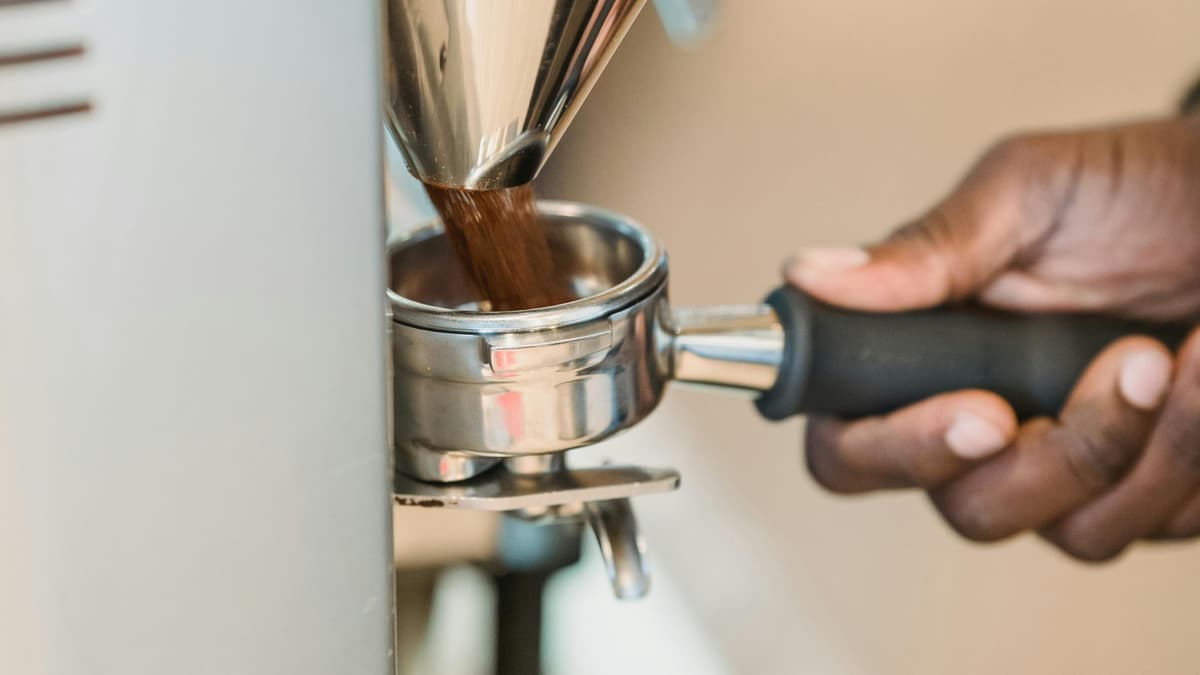
Manual espresso separates these functions. You grind with a separate grinder, dose into a portafilter, tamp by hand, lock into the machine, and control the extraction timing. Milk texturing requires learning to use a steam wand. Total time from bean to finished drink: 4-8 minutes including cleanup, longer while learning.
The time difference compounds across drinks. Making four morning lattes on a bean-to-cup takes about 3 minutes total. Making four morning lattes manually takes 15-20 minutes including heat-up time and cleanup. Over a year, that's roughly 100 hours difference.
Why manual espresso tastes better
The quality gap is real, though often overstated by enthusiasts. Manual setups typically produce better espresso for three interconnected reasons.
Dedicated grinders outperform built-in grinders. Bean-to-cup machines optimise for compact, quiet operation rather than grind consistency. The ceramic or steel burrs are smaller, the motors are weaker, and the engineering budget is split across multiple functions. A standalone grinder at the same total price as a bean-to-cup machine delivers significantly better grind quality.
Manual extraction allows adjustment. When a manual shot runs too fast or slow, you adjust the grind and try again. Each shot teaches you something. Bean-to-cup machines make adjustments difficult or impossible, and when shots taste off, your only option is usually a different bean or accepting the result.
Manual steam wands produce better milk texture. Automatic milk frothers create acceptable foam but can't achieve the silky microfoam needed for latte art or cafe-quality texture. If milk drinks are your primary interest, this matters more than the espresso itself.
The gap narrows at higher price points. A top-tier bean-to-cup machine like a Jura or high-end DeLonghi approaches manual quality for straight espresso. But at that price, you could buy an exceptional manual setup instead.
Why bean-to-cup wins for many households
The convenience advantage is equally real. Bean-to-cup machines solve problems that manual setups create.
Anyone can use them immediately. Your partner, your parents visiting, your teenager wanting coffee before school. No training required. No technique to learn. The machine produces consistent results regardless of who presses the button.
Volume is effortless. Making drinks for guests, family breakfasts, or an afternoon caffeine round takes minutes rather than dominating your time. If coffee serves a social function in your home, manual espresso can make you feel like a servant rather than a host.
Maintenance is simpler. Bean-to-cup machines run cleaning cycles automatically. You empty grounds containers, fill water tanks, and occasionally descale. Manual setups require daily backflushing, weekly deep cleaning, and careful attention to grinder maintenance.
Counter space is optimized. One machine versus two, plus all the accessories that accumulate around manual setups. In small kitchens, this matters.
The honest comparison
Shot quality at comparable price points goes to manual by a significant margin. A mid-range manual setup (machine plus grinder) produces better espresso than a bean-to-cup machine at the same price. The same applies to milk drinks, where manual wins for texture and temperature control since bean-to-cup automatic frothers are adequate but not exceptional.
Time per drink is where bean-to-cup wins decisively, by 5-10x. This compounds across drinks and days. Bean-to-cup also requires almost no learning curve, while manual requires weeks to months for competence and longer for mastery. Manual setups offer more flexibility, accommodating any bean, any grind adjustment, any technique experiment, whereas bean-to-cup machines have fixed parameters within limited adjustment ranges.
Long-term satisfaction depends entirely on personality. Manual enthusiasts find bean-to-cup boring and limiting. Bean-to-cup users find manual tedious and pretentious. Neither view is wrong. If you're leaning manual, our entry-level setup guide covers the best machine + grinder pairings.
Best bean-to-cup machines
The DeLonghi Magnifica S represents the value sweet spot. It makes acceptable espresso, froths milk adequately, and costs less than many manual machine-only options. The build quality is "good enough" rather than impressive, but at this price, expectations should be calibrated accordingly.
The Philips 3200 LatteGo has the easiest milk system. The removable milk container cleans in seconds rather than minutes. If you're making multiple milk drinks daily, this convenience adds up.
For higher budgets, Jura machines represent the premium end with better grinders and more consistent extraction. Whether the improvement justifies the price increase depends on your sensitivity to espresso quality.
Best manual setups
The Breville Bambino Plus plus a Timemore C3 ESP PRO is the entry bundle and delivers beginner-friendly manual espresso. The Bambino's automatic milk frother gives a fallback while learning manual steaming. Total setup is forgiving of technique mistakes while still rewarding improvement.
The Gaggia Classic Pro plus a 1Zpresso J-Ultra is the step-up setup and gives the traditional espresso learning path. The Gaggia demands proper technique but rewards it with excellent shots and decades of reliable service. This setup has higher ceilings but steeper learning curves.
For electric grinding, substitute the Breville Smart Grinder Pro for either manual grinder option.
Who should choose which approach
Bean-to-cup suits people where coffee serves a functional role rather than a hobby role. If you drink it for the caffeine and enjoy it reasonably but aren't interested in learning extraction theory or troubleshooting shots, bean-to-cup makes sense. The same applies if multiple people in your household drink coffee and you don't want to be the designated barista every morning, since the democratisation of coffee-making matters for household harmony. People with genuinely rushed mornings where 5 extra minutes would create stress benefit from bean-to-cup convenience. And if you value consistent adequacy over variable excellence, bean-to-cup machines deliver 7/10 coffee every time whereas manual setups produce 5/10 while learning, 8/10 when competent, and occasionally 9/10 when everything aligns.
Manual suits people where coffee is or might become a hobby. If the learning process appeals to you, dialing in shots sounds interesting rather than tedious, and you enjoy developing craft skills, manual makes sense. People chasing specific flavor profiles from single-origin coffees, light roasts, or distinctive processing methods benefit from manual extraction since it lets you highlight these characteristics while bean-to-cup machines tend to flatten distinctions. If you're sensitive to coffee quality and willing to invest time to achieve it, noticing the difference between good and great espresso, manual rewards that attention. Manual also works well for people making primarily one or two drinks for themselves since the time investment scales linearly with drinks and for solo consumption the time cost is modest.
The hybrid approach
Some households run both. A bean-to-cup handles high-volume mornings and guest coffee. A manual setup serves weekend rituals and solo experimentation. This requires budget and counter space but solves the fundamental tension between convenience and quality.
Alternatively, start with bean-to-cup to establish whether home coffee matters to you, then transition to manual if you find yourself wanting more control. A used bean-to-cup recovers 50-70% of purchase price, making this a relatively low-risk exploration path.
My honest recommendation
If you're reading espresso guides on the internet, you're probably interested enough in coffee that manual equipment will eventually appeal. But if you've never made espresso at home and aren't certain the hobby will stick, starting with a decent bean-to-cup like the DeLonghi Magnifica S lets you explore without committing to a learning curve.
If you already know you want to learn proper espresso, skip bean-to-cup entirely and start with a Breville Bambino plus grinder setup. The learning will be frustrating initially but rewarding long-term.
Either path produces coffee better than most high-street chains. Choose based on what you want from the process, not just the product.
Common questions about bean-to-cup vs manual espresso
Is bean-to-cup espresso actually espresso?
Yes, technically. Bean-to-cup machines use pressure extraction and produce genuine espresso by definition. However, the quality typically falls short of what a skilled user achieves with manual equipment because built-in grinders compromise on consistency and extraction parameters are less adjustable.
Can I make latte art with a bean-to-cup machine?
Generally no. Automatic milk frothers produce adequate foam but pour it directly into the cup without the controlled stream needed for latte art. If latte art matters to you, manual equipment is the only realistic path.
How much maintenance do bean-to-cup machines need?
Less than manual setups but more than people expect. You'll empty grounds containers daily, run cleaning cycles weekly, and descale monthly or as prompted. The internal brew group on some machines requires periodic removal and cleaning. Overall effort is lower than manual but not zero.
Can we use specialty coffee in a bean-to-cup machine?
You can, but the results may disappoint. Bean-to-cup machines work best with medium roasts designed for the format. Light roasts and single-origins with delicate flavor profiles often taste flat because the fixed extraction parameters don't highlight their characteristics the way manual brewing can.
What's the total cost of ownership over five years?
Bean-to-cup machines have higher upfront costs but require almost no skill development investment. Manual setups have lower machine costs but require time to learn. Over five years, a DeLonghi Magnifica Evo with regular descaling and occasional maintenance runs a little more than its sticker price once upkeep is factored in. A Breville Bambino Plus plus a Timemore C3S Pro costs less upfront, with a modest burr replacement at year three adding a small amount on top. On paper, manual wins on cost. But the relevant question is whether the time invested learning to dial in manual espresso has value for you, some people genuinely enjoy that process, others find it tedious.
Can bean-to-cup machines be serviced at home?
Most of the routine maintenance is genuinely straightforward, descaling with the machine's guided program, rinsing the brew unit, and occasionally lubricating the brew group. Where it gets more complex is internal component replacement. Brew unit seals, grinder burrs, and pump replacements often require disassembly that most home users aren't comfortable with. DeLonghi has US service centers, though coverage varies by region. If you're buying bean-to-cup, factor in service access when choosing a brand, a cheaper machine from a brand with poor US repair support can become expensive over time.
What cleaning routine does a bean-to-cup machine require?
This is where many buyers underestimate the commitment. Most bean-to-cup machines require daily rinsing of the brew unit, weekly cleaning of the drip tray and bean hopper, and monthly descaling cycles. Many machines automate the reminders, a prompt will appear on screen when a cleaning cycle is due. Skipping descaling is the most common cause of machine failure. Hard water areas require descaling every one to three months depending on usage; if you have hard tap water, a built-in water filter (included on many DeLonghi models) helps extend intervals. Machines with removable brew units are significantly easier to maintain than those with sealed internals. Factor cleaning time into your decision: ten to fifteen minutes per week is realistic, plus a forty-five minute descaling cycle every few months. It is worth checking whether your machine uses proprietary cleaning tablets, which add ongoing cost, or accepts generic descaler solutions widely available online.
Not sure which approach fits your lifestyle?
What to Avoid
Buying bean-to-cup assuming it produces the same espresso quality as a semi-automatic. Bean-to-cup machines automate grind, tamp, and extraction at parameters designed for broad palatability. A semi-automatic machine with a quality grinder, properly dialled in, produces consistently better espresso than bean-to-cup at any equivalent price. If espresso quality is your primary criterion, bean-to-cup is not the right category.
Choosing manual espresso expecting an immediate cafe-quality result. Home semi-automatic espresso requires a grinder, tamper, portafilter routine, and ongoing dialling-in. The first month often involves mediocre shots while you learn the variables. People who expect to buy a Gaggia Classic Pro and immediately produce cafe-quality espresso are consistently disappointed. The machine is capable of excellent results, so is the user, after several weeks of daily practice.
Buying bean-to-cup with a budget that doesn’t reach a quality model. The meaningful quality floor for bean-to-cup sits at the lower mid-range (De’Longhi Magnifica Evo, Philips 3200). Below this, the machines produce drinks that neither match good semi-automatic espresso nor the better bean-to-cup machines. The cheapest bean-to-cup machines produce disappointing results at both ends of the comparison. If the budget won’t reach that quality floor, a manual setup with a hand grinder produces better espresso at lower cost.
Switching from bean-to-cup to manual without researching the grinder requirement. The most common post-bean-to-cup mistake is buying a semi-automatic machine without realising a separate grinder is required. Bean-to-cup’s one-box simplicity sets an expectation that all espresso machines work the same way. They don’t. Plan the machine and grinder budget together, a solid mid-range total minimum for a setup that produces real espresso.
Take our 60-second quiz to get a personalized recommendation based on how many drinks you make daily, who else uses your coffee setup, and whether you're interested in learning the craft or just drinking great coffee.
Take the Espresso Setup Quiz →
Either way, you are about to start every morning with coffee that is better than anything a chain can pour. Made your way, to your taste, in your kitchen. That is the whole point.
Find Your Perfect Setup
Answer a few quick questions and get personalised recommendations.
Start the QuizFrequently Asked Questions
Is bean to cup better than manual espresso?
Different, not better. Bean to cup is more convenient. Manual espresso tastes better once you learn it. Choose based on your priorities.
Why do coffee people dislike bean to cup?
Built-in grinders can't match dedicated espresso grinders. You can't fine-tune extraction. But for convenience, modern bean to cup is respectable.
Should a beginner get bean to cup or manual?
If you want ease: bean to cup. If you want to learn the craft and get better coffee long-term: manual. Our quiz helps you decide.
Related Guides
Ready to find your perfect setup?
Our quiz matches you with the right machine, grinder, and accessories.
Take the Quiz - It's FreeNo email required